
WELCOME BONUS 300%
UP TO €2000 + 100
FREE SPINS
UP TO €2000 + 100
FREE SPINS
Home → Blackjack
Blackjack at Casinos Vulkan Vegas: Variants, Rules and Payouts
Side Bet Every Round: Budget Lasts 30 Rounds
The Infinite Blackjack table hosted by Evolution offers side bets including Any Pair, 21+3, Hot 3, and Bust It. These wagers sit alongside the main game with limits ranging from 1 to 5,000 EUR per round. A player funding a 30-round session at the maximum stake requires a dedicated budget of 150,000 EUR for these specific options alone. This substantial capital requirement excludes casual players who cannot sustain such high-volume exposure during bonus play.
Lightning Blackjack also features side bets but introduces Lightning Multipliers up to 25x on winning hands. The betting range here is narrower, spanning from 1 to 2,500 EUR per spin at the Evolution table. While the potential payout multiplier increases excitement, the lower maximum limit restricts the total volatility compared to the Infinite variant. Players must weigh the higher win potential against the reduced capacity for large stakes in each individual round.
Blackjack Party provides a distinct atmosphere with two moderators but maintains a tighter financial ceiling for participants. The table limits extend only from 1.00 to 1,000 EUR, which caps the absolute risk per bet significantly. This structure suits players seeking entertainment without the extreme variance found in the higher-limit tables. Consequently, the bankroll duration extends further when utilizing the same initial deposit across these more constrained betting environments.
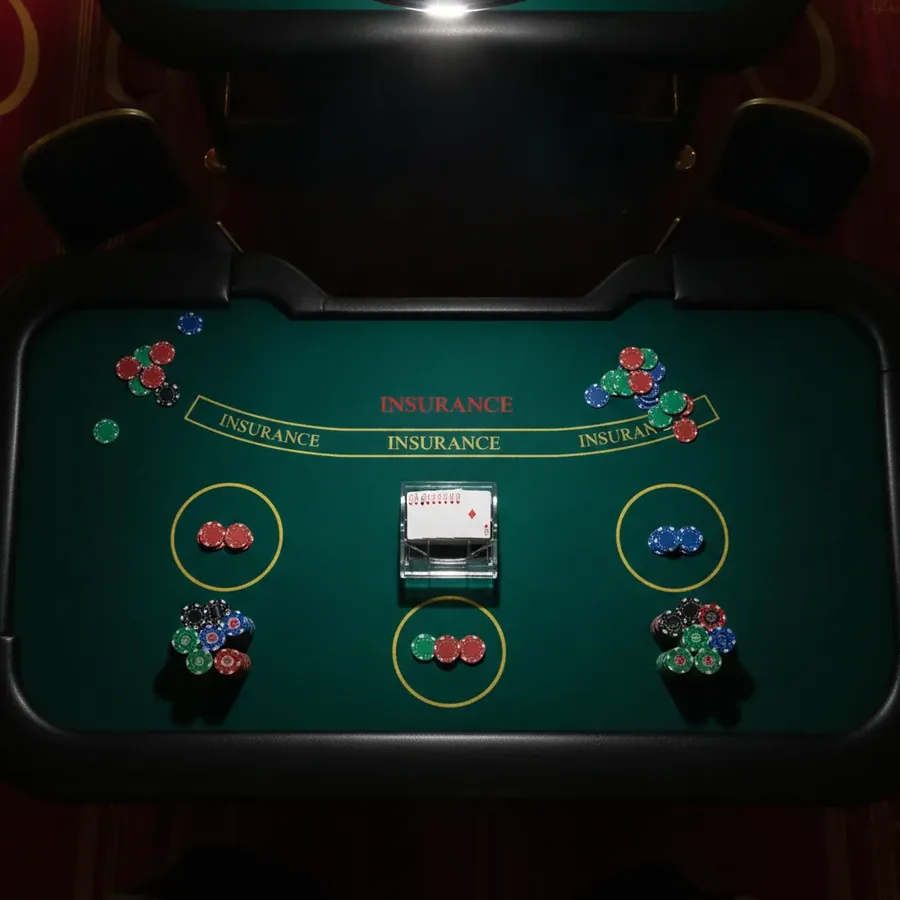
What Percentage Does Blackjack Count Towards Bonus?
Table games contribute only 10 percent toward the required wagering turnover for the welcome bonus package. Slots contribute 100 percent, creating a massive disparity in how quickly bonus funds can be cleared. A 2,000 EUR bonus therefore demands 20,000 EUR in blackjack turnover versus just 2,000 EUR in slot play. This mathematical reality makes traditional card games highly inefficient for converting promotional credits into withdrawable cash.
The house edge in standard six-deck blackjack sits at 0.46 percent when using basic strategy. Combined with the low contribution rate, the expected loss on the required turnover becomes substantial and predictable. Playing Liberal Vegas Strip rules improves this slightly with an RTP of 99.72 percent and a house edge of 0.28 percent. Even with these favorable conditions, the penalty from the 10 percent contribution rate remains the dominant factor in profitability calculations.
Insurance bets present an even worse scenario with a house edge of 7.47 percent and an RTP of 92.53 percent. Since insurance counts as a separate side bet, it accelerates the depletion of the bonus balance rapidly. Basic strategy dictates always rejecting insurance unless counting cards with a true count greater than or equal to three. Relying on this niche exception is statistically unreliable for clearing the bulk of the wagering requirements efficiently.
Check table limit before the first bet
Infinite Blackjack allows bets up to 5,000 EUR, establishing the highest possible stake ceiling among the reviewed tables. Exceeding this limit voids any associated bonus funds and forfeits all winnings generated from the violation. Players must verify their current balance against this strict threshold before placing any qualifying wager on the felt. Ignoring this cap results in immediate disqualification from the promotion regardless of the game outcome or skill level.
Lightning Blackjack imposes a stricter maximum limit of 2,500 EUR per hand at the Evolution provider table. This restriction halves the maximum exposure compared to the Infinite variant, altering the risk management strategy for high rollers. Bonuses are typically tied to smaller denominations, making the 2,500 EUR cap irrelevant for most promotional accounts. However, large deposits must still respect this hard boundary to ensure compliance with the platform's operational rules.
Blackjack Party operates within the lowest bracket, capping bets at 1,000 EUR per round with its dual moderators. This lower limit ensures that even players with moderate bankrolls can participate without risking excessive amounts per spin. The constraint forces a slower pace of play, which may actually benefit those aiming to meet wagering requirements gradually. Adhering to these specific table limits is crucial for maintaining the validity of the bonus throughout the entire playing session.
Register Late Surrender correctly in three steps
Late Surrender reduces the house edge by 0.08 percentage points, improving the overall return to player statistics. This rule allows players to forfeit half their bet after the dealer checks for blackjack, mitigating losses on weak hands. Implementing this strategy requires precise timing and knowledge of when the dealer has an Ace or Ten showing. Utilizing this option effectively can preserve a portion of the bonus balance during unfavorable dealing scenarios.
Early Surrender is significantly more valuable, reducing the house edge by up to 0.6 percentage points in ideal conditions. However, this specific rule is extremely rare and generally unavailable in modern online casino environments like Vulkan Vegas. Players should not rely on finding Early Surrender options, as their absence forces reliance on the less effective Late Surrender variant. Understanding this distinction prevents confusion when evaluating the actual strategic advantages available at different virtual tables.
Standard liberal rules include Resplitting Aces and Double After Split, which improve RTP by 0.08 and 0.14 percentage points respectively. These mechanics complement Late Surrender by offering additional flexibility in managing difficult starting hands. Combining these favorable rules with proper surrender decisions creates the most efficient path for preserving bonus funds. Each strategic decision must align with the specific table configuration to maximize the theoretical return over thousands of hands.
Soft 17: Dealer Hits or Stands
When the dealer hits Soft 17, the house edge increases by 0.22 percentage points compared to standing on all seventeen totals. This rule change negatively impacts the player's expected value across every hand played during the bonus period. Six-deck games often employ this variation, resulting in a house edge of 0.46 percent with basic strategy applied. Players must adjust their betting patterns to account for this increased statistical disadvantage inherent in the game structure.
Resplitting Aces improves the player's position by 0.08 percentage points, partially offsetting the damage caused by H17 rules. This allowance permits players to draw multiple cards to split aces, increasing opportunities for strong final hands. Despite this minor improvement, the cumulative effect of hitting soft seventeen remains a significant hurdle for bonus clearing. Strategic adherence to basic charts becomes even more critical when navigating these specific rule combinations effectively.
Double After Split enhances the player's advantage by approximately 0.14 percentage points, providing another layer of mitigation against unfavorable dealer rules. This feature allows doubling down on any two cards received after splitting, expanding tactical options significantly. However, the net result still favors the casino more than games where the dealer stands on soft seventeen. Understanding these incremental shifts helps players select tables that minimize the erosion of their bonus equity.
Blackjack variants at a glance
| Variant | Payout | House edge | Rule | Bet range |
|---|---|---|---|---|
| Blackjack Liberal Vegas Strip (liberale Regeln, 3:2) | 99.72% | 0.28% | Günstigste Regelkombination: S17 + DAS + Resplit + Late Surrender. Standardabweichung 1,15 | Blackjack 3:2, Gewinn 1:1 |
| Blackjack Insurance / Versicherung (6–8 Decks) | 92.53% | 7.47% | Separate Nebenwette bis 50% der Hauptwette, wenn der Dealer ein Ass hat. Basisstrategie schreibt IMMER Ablehnung vor (außer Karten zählen bei True Count ≥ +3). Bei einem Deck Vorteil ≈ 5.88% | Insurance 2:1 |
| Blackjack Surrender (Late Surrender) – Regel-Effekt | n.a. (Regel-Modifikator) | −0.08 Prozentpunkte | Spieler gibt Hand nach Dealer-Blackjack-Prüfung auf, verliert die Hälfte des Einsatzes. Verbessert RTP um ca. 0.08 Prozentpunkte. Early Surrender ist wesentlich wertvoller (bis −0.6 Prozentpunkte), aber extrem selten. | Rückzahlung 50% des Einsatzes |
| Blackjack Auszahlung 6:5 statt 3:2 (6 Decks) | 98.15% | 1.85% | Ersatz von 3:2 durch 6:5 fügt exakt +1.39 Prozentpunkte zum Vorteil des Casinos hinzu – stärker als jede andere Regeländerung. Bei $10 Einsatz zahlt Blackjack $12 statt $15. | Blackjack 6:5, Gewinn 1:1 |
| Blackjack Ein Deck, klassische Regeln, 3:2 | 99.85% | 0.15% | Weniger Decks = niedrigerer Vorteil; ein Deck gibt ca. −0.48 Prozentpunkte gegenüber 8 Decks. Oft durch 6:5 Auszahlung kompensiert. | Blackjack 3:2, Gewinn 1:1 |
| Blackjack Split / Double / H17 – Regel-Effekte | n.a. (Regel-Modifikatoren) | H17 +0.22 Prozentpunkte; RSA −0.08 Prozentpunkte; DAS −0.14 Prozentpunkte | Dealer Hits Soft 17 verschlechtert RTP um 0.22 Prozentpunkte; Resplit Aces verbessert um 0.08 Prozentpunkte; Double After Split verbessert um ca. 0.14 Prozentpunkte; 6 Decks statt 8 – ca. 0.02 Prozentpunkte. | Double – Einsatz ×2 mit einer Karte; Split – bis 4 Hände; Ass-Split meist mit einer Karte. |
Double Down vs Simple Hit on 11
The blackjack variant labeled Blackjack Split / Double / H17 defines doubling as placing a bet equal to the original stake with exactly one card, a mechanic that restricts player flexibility compared to hitting. This specific rule interaction alters the theoretical return, contributing to an RTP marked as not available because it depends entirely on the modifier settings applied by the operator rather than a fixed standard table. Players must accept this limitation as the cost for accessing the aggressive doubling strategy during their session at the virtual table.
When comparing the standard Blackjack 6 Decks game which allows doubling on any two cards, the house edge drops significantly to 0.46 percent due to the liberal DAS and DOA rules. The variant with H17 increases the house advantage by 0.22 percentage points, making the simple hit option statistically superior for conservative players who avoid the risk of doubling. This difference in edge directly impacts the long-term bankroll erosion rate for users choosing the less favorable rule set over the standard version.
Infinite Blackjack from Evolution offers a minimum stake of 1 EUR up to 5,000 EUR, allowing high rollers to test these doubling strategies without excessive exposure to the increased house edge. The game maintains an RTP of 99.47 percent, which is higher than the H17 variant discussed previously, providing a more favorable mathematical environment for those who double down frequently. The unlimited seating ensures that strategic decisions are not rushed by time pressure or limited table availability during peak hours.
Ace Split: only one card per hand
This rule applies to the general mechanics described under Blackjack Split / Double / H17, where the resplitting of Aces is noted as a positive modifier that improves RTP by 0.08 percentage points if allowed. However, the single-card limit remains the dominant constraint for most standard implementations found in online casino environments today.
Blackjack Liberal Vegas Strip utilizes liberal rules including resplitting capabilities, yet the single-card limit on split Aces persists in many variations to control the casino's mathematical advantage. While the overall house edge for this specific variant sits at a low 0.28 percent, the inability to draw multiple cards to split Aces prevents players from turning pair Aces into strong hands like twenty or twenty-one. This structural limitation forces players to rely on other strategic elements to maintain their bankroll stability over extended playing sessions.
Lightning Blackjack from Evolution allows unlimited players at the table but does not explicitly override the standard Ace splitting rules regarding the number of cards received. The game features multipliers up to 25x on winning hands, which can compensate for the reduced opportunities created by the single-card split rule through occasional high-payout side bets. Players engaging with this live dealer format must account for the rigid splitting constraints when calculating their expected value per hand played.
One Deck vs Eight Decks in House Edge
Using a single deck instead of eight decks reduces the house advantage by approximately 0.48 percentage points, making the single-deck game statistically superior for skilled players who follow basic strategy perfectly. The specific example of Blackjack Ein Deck shows a house edge of just 0.15 percent with an RTP of 99.85 percent, which is among the lowest available in standard online casino offerings. This significant improvement in odds comes at the cost of fewer opportunities to apply complex strategies like card counting effectively over short periods.
Conversely, games utilizing six to eight decks, such as the standard Blackjack Insurance variant, present a much higher house edge of 7.47 percent when considering the insurance bet separately. The main game itself might offer better odds, but the presence of multiple decks dilutes the effectiveness of optimal play, pushing the overall expected return lower compared to single-deck alternatives. Players seeking the best mathematical outcome should actively avoid multi-deck shoes unless the payout structure compensates with favorable rules like surrender.
The difference in house edge between one deck and eight decks highlights why rule variations matter more than deck count alone in determining long-term profitability. While single-deck games offer a 0.15 percent edge, multi-deck games often introduce side bets or restrictive rules that inflate the casino's advantage significantly beyond the base game metrics. Understanding this dynamic helps players select tables that align with their risk tolerance and strategic capabilities within the broader context of bonus wagering requirements.
How many decks are in the shoe?
The Blackjack Insurance variant operates with a shoe containing between six and eight decks, a configuration designed to slow down card penetration and reduce the effectiveness of advanced tracking techniques. This specific deck count contributes to a house edge of 7.47 percent for the insurance side bet, which requires a separate wager up to fifty percent of the main stake. The use of multiple decks ensures that the statistical probability of the dealer having a ten-value card remains relatively stable across different rounds of play.
In contrast, the classic Blackjack Ein Deck variant uses exactly one deck, which dramatically lowers the house edge to 0.15 percent and boosts the RTP to 99.85 percent. This single-deck setup allows for faster shuffling and potentially higher volatility, appealing to players who prefer quicker decision-making processes and tighter mathematical controls. The stark difference in deck composition between these two examples illustrates how fundamental game design choices directly impact the player's long-term expected loss rate.
Live dealer tables like Infinite Blackjack typically use automatic shuffling machines that cycle through six to eight decks continuously, maintaining the efficiency of the game flow while preserving the standard house edge. The minimum bet of 1 EUR and maximum of 5,000 EUR accommodate various betting styles, but the underlying deck structure remains consistent with traditional brick-and-mortar casino standards. This consistency ensures that the theoretical return rates observed in digital simulations closely match the actual outcomes experienced by participants at the live table.
Step-by-step Split at the Live Table
Splitting pairs begins with the initial deal of two cards of identical rank, prompting the player to place a second bet equal to the original stake to create two independent hands. The Blackjack Split / Double / H17 rules allow splitting up to four hands, though splitting Aces is typically restricted to one card per hand to prevent excessive advantage exploitation. This step-by-step process requires careful consideration of the dealer's upcard and the specific rule modifiers active on the current table to maximize expected value.
After the split, each new hand plays out independently according to the chosen strategy, with the option to double down on the first two cards if the table permits DAS. The Resplit Aces rule, which improves RTP by 0.08 percentage points, may allow further splits if another Ace is drawn, although this is rare in practice due to the one-card limit. Players must monitor their bankroll closely during this phase, as the initial investment has doubled, increasing the variance and potential loss magnitude for the round.
Infinite Blackjack from Evolution facilitates this splitting process with unlimited seats and fast-paced dealing, ensuring that strategic splits are executed without delay or interference from other players. The game's RTP of 99.47 percent provides a favorable backdrop for applying optimal splitting strategies, particularly when combined with the availability of side bets like Any Pair or 21+3. Mastery of the splitting sequence is essential for minimizing the house edge and maintaining a competitive edge over the casino's mathematical advantage.
Six Card Charlie Pays Immediately with Six Cards
The Blackjack Surrender rule allows players to forfeit half their stake after the dealer checks for blackjack, improving the RTP by approximately 0.08 percentage points. This mechanic is distinct from early surrender, which offers a greater benefit of up to 0.6 percentage points but remains extremely rare in modern online environments. Players who utilize late surrender effectively reduce the house edge compared to standard tables without this option.
Standard payouts for winning hands remain at 1:1, while specific side bets like Insurance pay 2:1 but carry a significantly higher house edge of 7.47%. The base game RTP for a six-deck table with S17 and DAS stands at 99.54%, provided the player adheres strictly to basic strategy. Deviating from optimal play erodes these theoretical returns quickly, making rule awareness critical for long-term bankroll management.
Infinite Blackjack tables offer unlimited seating positions with bets ranging from 1 to 5,000 EUR, accommodating high-volume wagering strategies. This format allows for multiple concurrent decisions without waiting for other players, though the core rules regarding card counts and payouts remain identical to traditional formats. The availability of four side bets adds volatility but does not alter the primary hand evaluation mechanics.
Infinite Blackjack vs Classic Seven-Seat Table
Lightning Blackjack features multipliers up to 25x on winning hands, operating within a bet range of 1 to 2,500 EUR with an RTP of 99.56%. These random enhancements can drastically increase short-term variance compared to standard tables, offering potential windfalls that are absent in classic seven-seat configurations. The unpredictability of these multipliers requires players to adjust their risk tolerance accordingly during active sessions.
Classic seven-seat tables typically adhere to stricter fixed limits and lack the dynamic multiplier systems found in live dealer variants like Lightning or Infinite versions. Standard tables often cap at lower maximum bets, restricting high-stakes players who might otherwise exploit bonus funds through larger wagers. The absence of side bet multipliers in classic formats results in more predictable, albeit slower, return trajectories over time.
Blackjack Party provides a lively atmosphere with two moderators, accepting bets between 1.00 and 1,000 EUR, catering to social gaming preferences. Unlike Infinite Blackjack, which focuses on speed and volume, Party tables prioritize interaction and entertainment value over pure mathematical efficiency. Players seeking faster turnover should prefer Infinite variants, while those valuing engagement may find Party tables more suitable despite similar underlying odds.
Blackjack doesn't count for every bonus offer
The welcome bonus offers 300% up to €2,000 plus 100 free spins, requiring significant wagering activity to unlock withdrawable funds. Slot games contribute 100% toward meeting these requirements, whereas table games like Blackjack contribute only 10%, severely limiting progress on this type of bonus. Consequently, playing Blackjack with bonus funds extends the time needed to clear the rollover by a factor of ten compared to slots.
Insurance bets in Blackjack carry a house edge of 7.47%, making them statistically unfavorable unless counting cards with a true count of +3 or higher. When combined with the low contribution rate of table games, utilizing such bets further delays bonus clearance without providing proportional bankroll growth. Players aiming to convert the €2,000 max bonus into cash should avoid table games entirely to minimize opportunity cost.
Basic strategy reduces the house edge to 0.46% on six-deck S17 tables, but this advantage is negated by the 10% contribution rule for bonus wagering. Even optimal play cannot overcome the structural disadvantage imposed by the casino's contribution weighting system for promotional funds. Users must calculate the effective cost of clearing bonuses via table games, which often exceeds the value of the bonus itself when factoring in time and expected loss.
Blackjack Contributes Only 10 Percent to Wagering
A €100 wager on Blackjack contributes merely €10 toward the total wagering requirement, forcing players to place ten times more chips than on slot machines. If the bonus amount is €2,000, clearing it via Blackjack would require €20,000 in total bets instead of the €2,000 needed for slots. This discrepancy drastically increases exposure to the house edge, accelerating bankroll depletion during the conversion process.
The house edge for standard six-deck Blackjack with S17 and DAS is 0.46%, meaning each €100 wagered loses an average of €0.46 over the long run. Applying this to the required €20,000 turnover results in an expected loss of approximately €92 before the bonus is even cleared. In contrast, slot contributions at 100% would require only €2,000 turnover, reducing the expected loss proportionally to roughly €9.20 depending on slot volatility.
Resplitting Aces improves RTP by 0.08 percentage points, yet this marginal gain is irrelevant when the game’s contribution rate dilutes its impact on bonus clearance. Players attempting to use skill-based advantages in Blackjack find their efforts neutralized by the administrative penalty of the 10% contribution rule. Strategic play becomes economically inefficient under these terms, as the reduced contribution rate outweighs any minor improvements in game rules.
No Double Down on three cards
Double After Split (DAS) improves RTP by approximately 0.14 percentage points, allowing players to double down on split hands for enhanced profit potential. However, restrictions often prohibit doubling on three or more cards, limiting opportunities to capitalize on favorable deck compositions after initial splits. This constraint reduces the overall flexibility of the betting strategy compared to tables allowing unrestricted doubling.
Splitting pairs allows players to create up to four separate hands, increasing the complexity of decision-making and potential payout scenarios. Without the ability to double down on subsequent cards in multi-card hands, players lose a key tool for maximizing value during strong starting positions. The combination of splitting and limited doubling options creates a narrower strategic window for optimal play.
Early surrender offers a greater benefit of up to 0.6 percentage points compared to late surrender’s 0.08 points, but it is rarely available in online casinos. When combined with restrictions on doubling after multiple hits, players face compounded limitations that favor the house over extended play sessions. Understanding these specific rule exclusions is essential for managing expectations regarding achievable returns from table game bonuses.
Contact
Live - online chat
Banking









Providers












Vulkan Vegas Casino 2026